
The Q3 Inventory Trap: How to Fund Holiday Stock Without Destroying Your Q4 Cash Flow

In short
For e-commerce founders, Q4 is won or lost in Q3. Here's how to fund your holiday inventory without draining the cash you need to actually sell it.
For e-commerce founders, the final golden months of the year are won or lost long before Black Friday arrives. In fact, the most critical battle happens right now, in Q3.
It's called the Q3 Inventory Trap, and it trips up even the fastest-growing brands every single year.
The trap is simple, predictable, and highly dangerous: to capture the massive demand of Black Friday, Cyber Monday (BFCM), and the winter holidays, you have to buy your stock months in advance. Your suppliers want cash upfront in August and September.
But when you empty your bank account to fund that massive inventory purchase, you face an immediate crisis: You have no cash left to market it when Q4 actually arrives.
The Fatal Cycle of the Inventory Cash Squeeze
When your working capital is entirely locked up in cardboard boxes sitting in a warehouse, your business goes into a liquidity freeze just as ad costs reach their yearly peak.
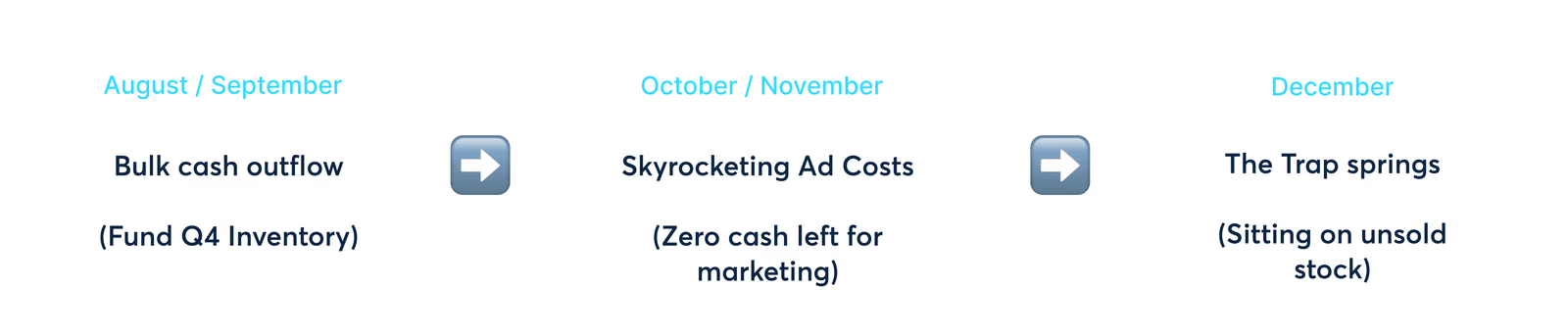
Without the budget to aggressively drive traffic, your high-potential Q4 turns into a slow-moving rescue mission. You are forced to run heavy discounts just to liquidate the stock and recoup your initial investment, destroying your profit margins in the process.
Why Traditional Funding Methods Fail E-commerce Brands
When founders realize they are caught in this cash squeeze, they usually look to two traditional sources of capital. Both come with severe drawbacks for digital-native brands:
Traditional Bank Loans: Banks move at a snail's pace. They demand personal guarantees, endless paperwork, and three years of pristine tax returns. By the time a traditional loan gets approved, the shipping deadline for holiday inventory has already passed.
Venture Capital / Equity: Selling 10% to 20% of your company to fund a temporary inventory spike is an incredibly expensive mistake. Equity should be used to build long-term value — like hiring core tech talent or developing new products — not to buy physical goods that will be sold and replaced in 90 days.
Breaking the Trap with Non-Dilutive Growth Capital
To scale seamlessly through Q4, you need to decouple your inventory costs from your operational cash flow. The smartest way to do this is by using Revenue-Based Financing (RBF).
Instead of draining your bank account or giving up equity, growth capital allows you to secure your holiday stock using a flexible cash injection based entirely on your digital sales performance.
How it works in practice: You use non-dilutive capital to pay your suppliers upfront in Q3. This keeps your core business cash liquid, leaving your bank balance fully intact and ready to deploy into high-ROAS (Return on Ad Spend) marketing campaigns when Q4 traffic peaks.
The Power of Revenue-Aligned Repayments
The biggest advantage of Revenue-Based Financing during the holidays is how you pay it back. Rather than facing rigid, fixed monthly payments that strain your cash flow during a slow week, repayments are tied to a small, fixed percentage of your daily sales.
When sales skyrocket in late November: You pay back faster because your revenue is high.
If shipping delays or supply chain hiccups slow things down: Your daily repayment drops automatically in tandem with your sales.
Don't Let Inventory Starve Your Marketing
A winning Q4 requires a double-engine approach: you need the stock to sell, and you need the ad budget to sell it. Funding your inventory with growth capital ensures that both engines are firing at 100% when the holiday rush begins.
Don't wait until October to realize your marketing budget is trapped in your warehouse. Secure your Q4 runway now, protect your equity, and ensure this holiday season is your most profitable one yet.
Ready to supercharge your growth?
Get a tailored, equity-free funding offer in as little as 3 days.