
Adaptive Capital vs. Fixed Debt: Why Modern Founders Are Moving Away from Venture Debt

In short
When scaling a high-growth SaaS platform or e-commerce brand, securing capital is rarely the hard part, but choosing the right kind of capital is.
For years, founders seeking non-dilutive capital turned automatically to traditional venture debt. On paper, it promised growth without giving up board seats. In practice, many founders discovered that rigid repayment structures, financial covenants, and hidden warrant dilution turned venture debt into a growth-choking weight during unpredictable market shifts.
Today, a clear shift is occurring across the startup ecosystem. Capital efficiency is king, and forward-thinking CFOs are choosing adaptive capital over fixed debt.
Here is a breakdown of how Revenue-Based Financing (RBF) compares to traditional venture debt, and why flexibility is your startup’s ultimate competitive advantage.
The Core Difference: Adaptive Capital vs. Fixed Debt
At its simplest, the debate comes down to how your capital behaves when your monthly revenue fluctuates:
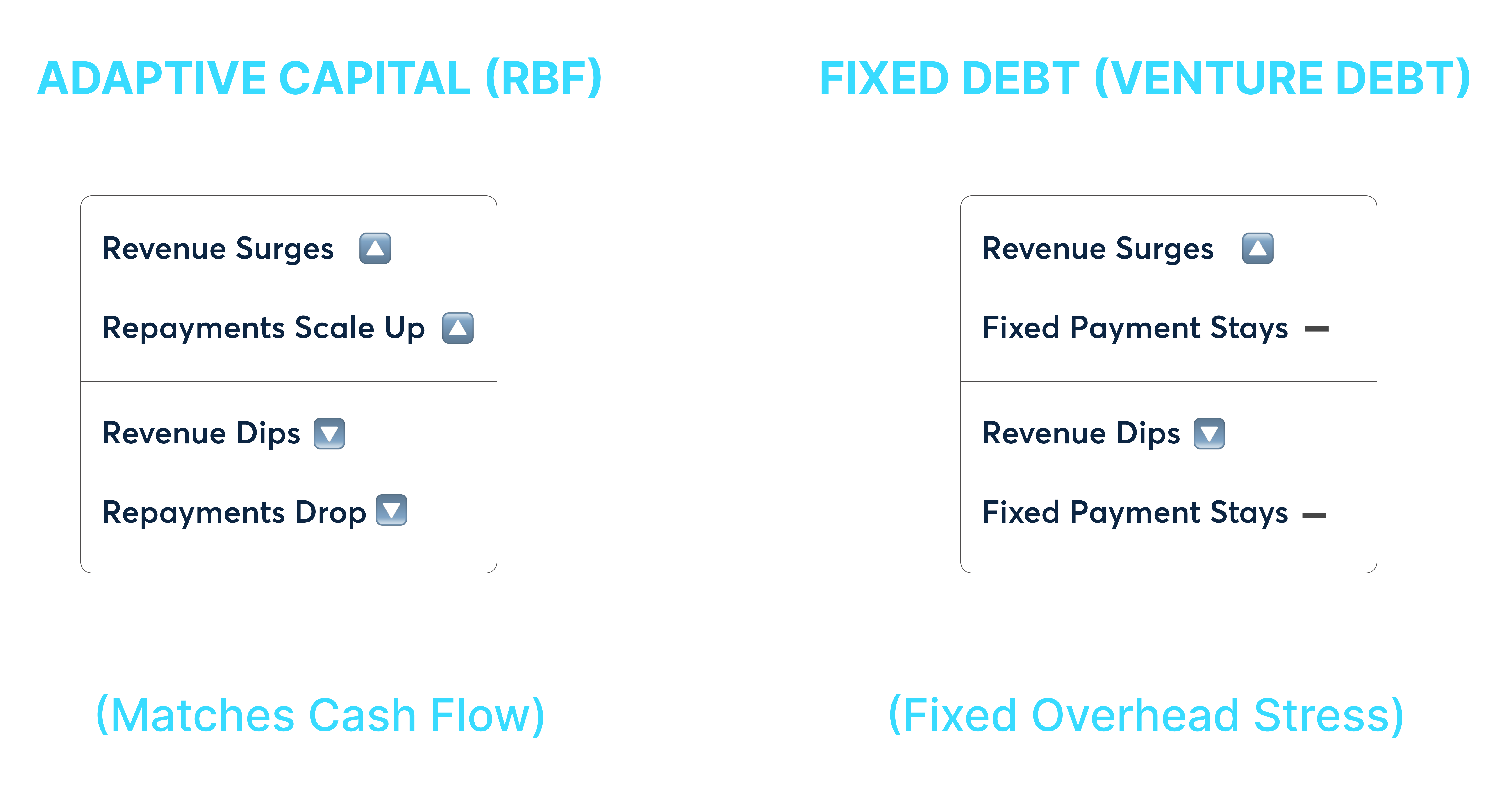
• Fixed Debt (Venture Debt): Operates on a rigid, predetermined schedule. You owe the exact same dollar amount on the first of every month, regardless of whether your sales doubled or dipped.
• Adaptive Capital (Revenue-Based Financing): Directly syncs with your operational momentum. Repayments are calculated as a small, agreed-upon percentage of your daily sales.
When your revenue surges, you pay off your advance faster. If you experience a seasonal dip or supply chain delay, your repayments automatically drop.
3 Hidden Pitfalls of Venture Debt
While venture debt can work in specific scenarios, traditional debt models carry structural trade-offs that can create friction for fast-moving digital businesses:
1. Financial Covenants & Restricted Liquidity
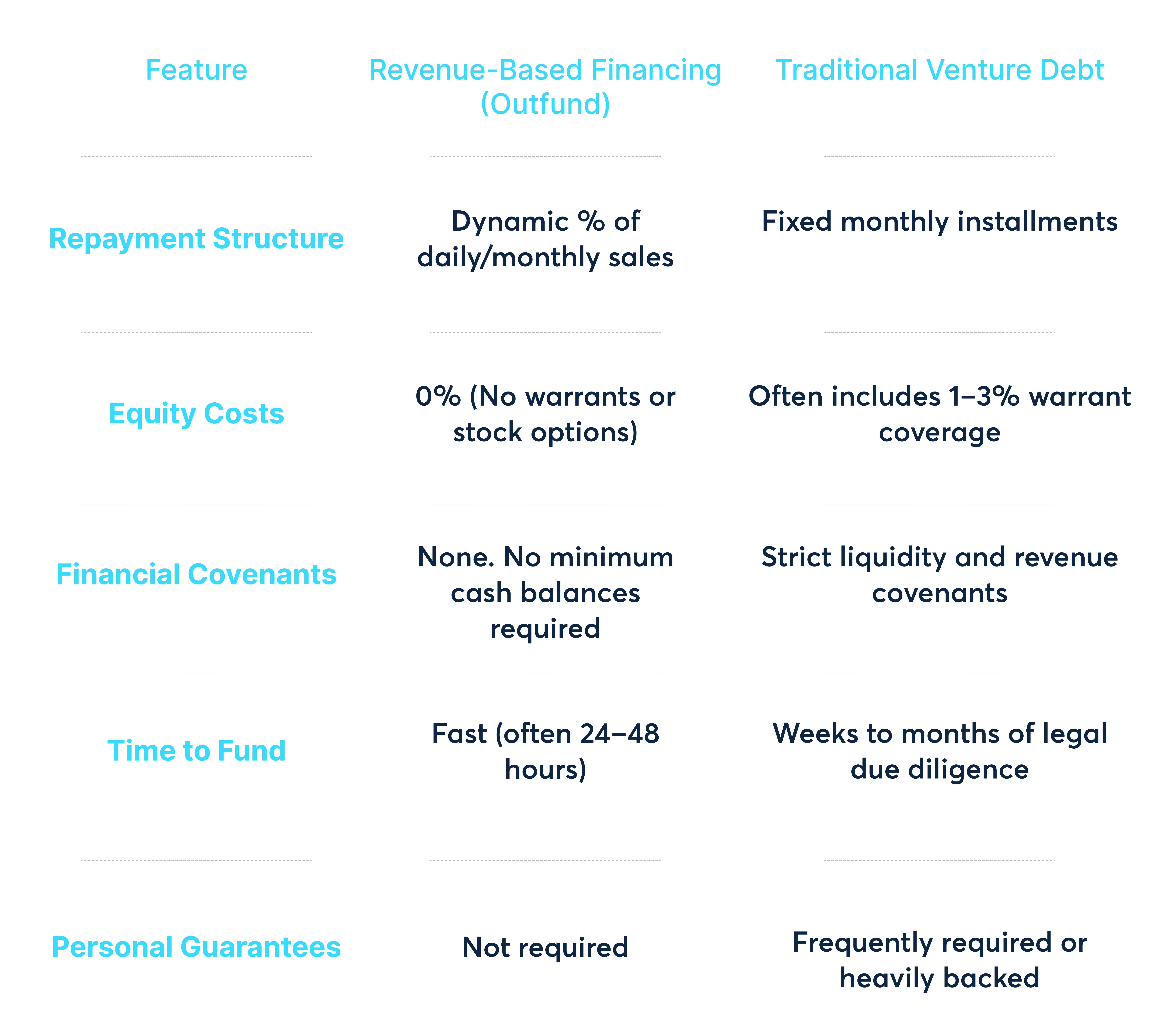
Most venture debt agreements come with strict financial covenants, such as maintaining a minimum cash balance or hitting specific recurring revenue targets. If you miss a target during a quiet quarter, the lender can restrict your credit line, demand immediate acceleration, or force operational oversight right when you need flexibility most.
2. Warrant Dilution (The "Hidden" Equity Cost)
Many founders assume venture debt is completely non-dilutive. However, lenders frequently require warrants, the right to purchase company stock at a future date at a set price. At exit, those warrants reduce your total ownership stake.
3. Personal Guarantees and Heavy Underwriting
Getting approved for venture debt often takes months of legal reviews, pitch deck audits, and extensive due diligence. In many cases, traditional debt instruments still ask for personal guarantees or extensive asset liens, putting extra risk on founders.
How Revenue-Based Financing Offers a Better Path
Revenue-Based Financing was built from the ground up for modern digital business models. Instead of evaluating arbitrary asset collateral or credit scores, algorithms analyze real-time accounting and payment gateway data (like Stripe, Shopify, or bank feeds) to underwrite capital based on your actual performance.
Choosing Capital That Aligns With Growth
Using rigid, long-term debt or dilutive equity to fund short-term operational expenses (like inventory stock-ups, ad campaigns, or hiring sales reps) creates a fundamental mismatch on your balance sheet.
If your company has predictable revenue, your capital should work with your sales engine, not against it. Adaptive capital ensures that your debt service never starves your operating budget.
Scale Your Business on Your Terms with Outfund
With Outfund, you can access to non-dilutive, flexible growth capital. Secure a custom funding offer based on your live revenue data, maintain 100% equity ownership, and pay back seamlessly as your sales come in.
Ready to supercharge your growth?
Get a tailored, equity-free funding offer in as little as 3 days.